
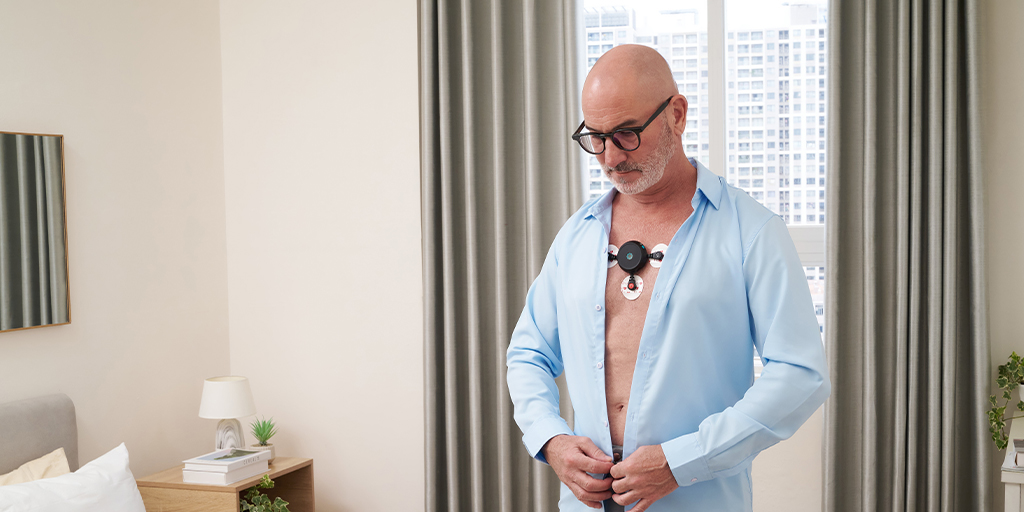
Holter monitoring has been a cornerstone of cardiac diagnostics for decades—familiar, widely used, and still prescribed every day. However, its role is gradually declining across cardiology clinics. Many cardiac conditions, particularly arrhythmias, occur sporadically and may not present during the limited 24–48 hour monitoring window. As a result, Holter testing often fails to capture clinically significant events.
Additionally, Holter monitors are typically passive, meaning they do not provide near real-time alerts to providers when serious abnormalities occur. This limitation has driven the shift toward continuous cardiac monitoring solutions, such as Mobile Cardiac Telemetry enabled by wireless heart monitor devices, which provides longer observation periods and more timely clinical intervention.
Where Holter Testing Falls Short
In theory, 24-48 hours of ECG data should be sufficient to detect abnormalities. In practice however, many heart issues do not occur in that timeframe. Clinicians often see the same pattern repeat: a normal Holter result, persistent patient symptoms, repeat testing, and ultimately a delayed diagnosis. This occurs because conditions such as intermittent atrial fibrillation or sporadic palpitations may fall outside the limited monitoring window. The issue is not clinical expertise, but insufficient duration of observation.
The Role of Wireless Heart Monitor Technology
Continuous cardiac monitoring with a wireless heart monitor extends observation from days into weeks, significantly increasing diagnostic yield. More importantly, it captures heart activity across real-life conditions:
- Daily routines
- Physical activity
- Sleep cycles
- Emotional stress
This broader dataset allows clinicians to move beyond isolated snapshots and evaluate trends over time. Instead of asking what happened during a short test, providers can assess how the heart behaves continuously.
These wireless heart monitor systems transmit data securely and automatically, reducing the need for manual uploads or in-person device management. This shift is critical in today’s healthcare environment, where efficiency and remote care capabilities are essential.
A wireless heart monitor enables:
- Real-time or near real-time data transmission
- Reduced reliance on in-clinic visits
- Faster clinical response to abnormalities
- Improved patient convenience and adherence
Unlike traditional Holter systems, wireless solutions are designed to support ongoing care rather than short-term testing.
Wearability Improvements in Compact Devices
Advancements in device design have played a meaningful role in the evolution of cardiac monitoring. Compact, lightweight solutions—such as the Spider Heart Monitor—have improved patient comfort and overall wearability, making it easier for patients to adhere to prescribed monitoring periods.
However, these devices still present important limitations. While the Spider Heart Monitor enhances portability, size alone does not address the core challenge of limited monitoring duration. In addition, fewer channels compared to Biotricity’s Biocore Pro may restrict the depth and quality of cardiac data captured, potentially impacting diagnostic yield.
From Devices to Integrated Monitoring Systems
The shift away from Holter testing is not just about better devices—it is about better systems. This is where solutions from Biotricity enter the picture not as incremental upgrades, but as replacements for outdated workflows.
Biotricity’s cardiac monitoring solutions are designed around continuous observation, not short tests. They support:
- Extended observation periods
- Reliable wireless data transmission
- Structured data interpretation
- Integration into clinical workflows
Biotricity’s solutions reflect this system-based approach. By combining wearable monitoring devices with connected platforms, they enable continuous data collection and deliver clinician-ready insights that support faster, more confident decision-making.
Fewer Repeat Tests, Faster Results
One of the most immediate benefits of continuous monitoring is the reduction in repeat testing. Instead of relying on multiple short-term tests, clinicians can gather a comprehensive dataset over time.
This leads to:
- Faster diagnoses
- Greater diagnostic confidence
- Reduced patient frustration
- Improved clinical efficiency
Patients benefit as well. Rather than being told their symptoms were not captured during testing, they gain reassurance that their condition is being monitored continuously.
Supporting Preventive Care
Continuous monitoring also aligns with the growing emphasis on preventive care. Rather than reacting to acute events, clinicians can identify early warning signs and intervene sooner.
Subtle rhythm changes, intermittent arrhythmias, and emerging patterns can be detected before they escalate. This proactive approach helps reduce complications and supports better long-term outcomes.
The Evolving Role of Holter Testing
Holter monitoring is not obsolete, but its role is becoming more limited. As continuous monitoring becomes more accessible and integrated into care models, clinicians are increasingly choosing longer-duration solutions.
The question is no longer whether extended monitoring is beneficial—it is why shorter monitoring windows should be relied upon when more comprehensive data is available.
Conclusion
Continuous cardiac monitoring is replacing traditional Holter testing because it better reflects how the heart behaves in real life. Longer observation periods, combined with wireless heart monitor technology, provide more complete data, fewer blind spots, and more confident clinical decisions.
While devices like the Spider Heart Monitor demonstrate improvements in comfort and wearability, the real advancement lies in connected, continuous monitoring systems like those offered by Biotricity. By integrating extended monitoring with actionable insights, solutions like those developed by Biotricity are helping redefine cardiac care.
In cardiology, accuracy over time matters more than convenience over a single day—and continuous monitoring delivers that clarity.