
When a physician orders a cardiovascular test to evaluate symptoms like palpitations or dizziness, the goal is straightforward: record the heart and identify abnormalities. In practice, however, the method used to record those heart signals can influence everything from patient compliance to diagnostic yield.
For decades, the Holter monitor has been the standard ambulatory ECG testing. More recently, continuous patch ECG systems with a home cardiac monitor have gained traction. While Holter monitoring and continuous patch ECG systems serve the same purpose, they differ in ways that can meaningfully affect clinical decision-making.
The Traditional Holter Monitor
Holter monitors typically record ECG data over a 24 to 48 hour period. While monitoring can occasionally extend beyond this window, two core limitations remain: the short duration of the study and its passive nature. Patients wear the device, complete the recording period, return it to the clinic, and only then is the data downloaded and reviewed—often delaying insight and intervention.
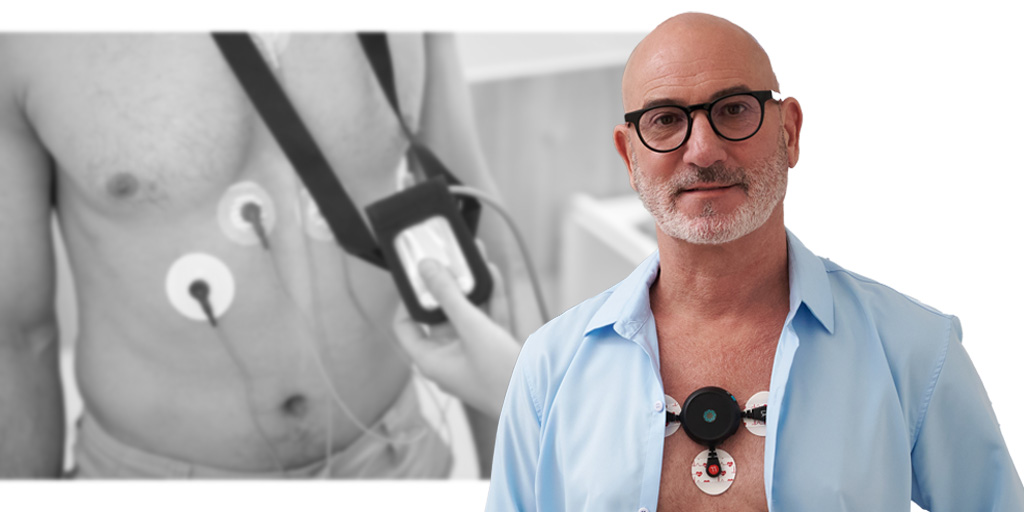
The setup is familiar across cardiology practices. Multiple electrodes are placed on the chest and connected by wires to a small recording device worn on a belt or shoulder strap. Patients leave the office and resume daily activities, though often with certain restrictions.
Clinically, the Holter remains a reliable cardiovascular test for capturing continuous heart rhythms within a defined timeframe. For patients experiencing frequent, daily symptoms—such as persistent palpitations, consistent ectopy, or sustained atrial fibrillation—this window may be sufficient.
However, for patients who may not be actively experiencing symptoms but have elevated cardiac risk, short-duration, passive monitoring with a Holter may miss clinically important events altogether. In these cases, longer-duration monitoring with active, continuous oversight can provide greater visibility and improve the likelihood of early detection.
Continuous Patch ECG: A Newer Approach
Continuous patch ECG systems simplify the monitoring experience by integrating all components into a single adhesive patch. This design eliminates wires and external recorders, making it easier for patients to maintain normal daily routines.
Because of this streamlined form factor, patch systems are increasingly used as a home cardiac monitor, allowing patients to complete testing comfortably outside the clinical environment.
More importantly, these devices often support extended monitoring periods—ranging from several days to multiple weeks. For patients with sporadic symptoms, this longer duration significantly improves the likelihood of capturing clinically meaningful events.
Why Duration Drives Diagnostic Yield
The key difference between these two approaches is not just design—it is time and the ability to notify providers when clinically significant events occur.
Many arrhythmias occur infrequently. A patient may experience symptoms once every few days—or even less often. In these cases, a short-duration Holter cardiovascular test may return normal results despite the presence of an underlying condition.
Extended monitoring through a patch-based home cardiac monitor significantly improves the likelihood of detection by capturing a broader range of cardiac activity over time. This longer observation window, combined with more continuous oversight, provides greater clarity for accurate diagnosis and treatment planning.
This difference in duration and responsiveness directly impacts diagnostic yield. Traditional Holter monitors have been shown to capture only a fraction of cardiac issues, while continuous monitoring solutions like those offered by Biotricity — can achieve diagnostic yields exceeding 60%.
Patient Lifestyle and Usability
Patient experience plays a significant role in the success of any cardiovascular test. Devices that are uncomfortable or disruptive can lead to incomplete monitoring and reduced data quality.
Patch-based systems, functioning as a home cardiac monitor, are designed to minimize these barriers. Their discreet, low-profile design allows patients to maintain normal routines without interruption, improving compliance and resulting in more complete, reliable datasets.
However, some of these systems introduce new challenges. Certain devices require patients to carry a secondary device—such as a phone or tablet—to enable continuous data transmission or provider notifications. This added complexity can create friction, reduce adherence, and introduce potential gaps in monitoring.
Biotricity addresses this limitation with a more integrated approach. Its Biocore Pro device offers a 3-channel configuration—comparable in size to many single-lead patch systems—while incorporating both Bluetooth and cellular connectivity. This eliminates the need for additional hardware, simplifying the patient experience while maintaining continuous data transmission and clinical visibility.
As healthcare continues to shift toward home-based care, patient-friendly monitoring solutions that balance simplicity, connectivity, and clinical performance will play an increasingly important role.
Conclusion
Holter monitors and continuous patch ECG systems both play important roles in cardiac diagnostics. The difference lies in duration, usability, and the ability to capture real-world cardiac activity. Holter monitors remain a reliable cardiovascular test for short-term evaluation of frequent symptoms. Continuous patch ECG systems, often used as a home cardiac monitor, extend monitoring windows and improve detection of intermittent arrhythmias.
Ultimately, the right choice depends on the clinical question. When symptoms are unpredictable, longer observation often provides the answers that short-term testing cannot.
Sometimes, a brief snapshot is enough.
Other times, continuous monitoring reveals what short windows miss.